
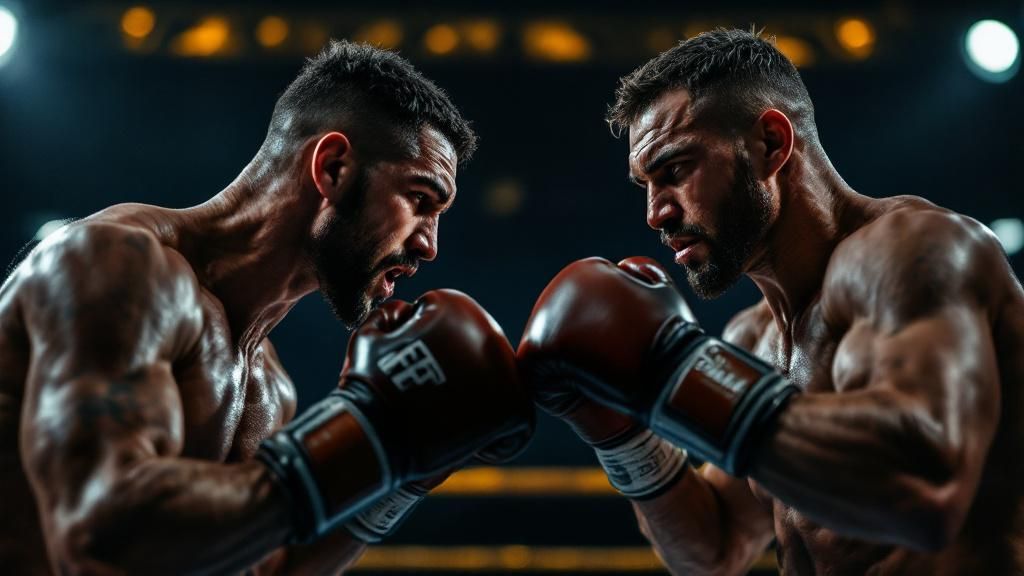
WBO heavyweight world champion Fabio Wardley has encouraged veteran Derek Chisora to step away following his highly anticipated bout against renowned boxing rival Deontay Wilder on Saturday night. The two veteran heavyweight fighters, aged 42 and 40 in that order, will both be contesting their 50th career bout when they meet at London’s O2 Arena. Wardley, who has sparred extensively with Chisora and counts him amongst his closest supporters in the sport, believes the time has come for the British heavyweight to step away from the ring. “Derek Chisora has dedicated himself completely to the sport,” Wardley said. “Whether he beats Deontay Wilder or not on Saturday, I’d like to see him hang up his gloves.”
A Career Worthy of Respect
Wardley’s sentiments showcase the profound appreciation he maintains towards Chisora’s impact on the sport of boxing. Having worked extensively the veteran fighter during his career, Wardley witnessed firsthand the focus and determination that has characterised Chisora’s two decades in the sport in the sport. “After all the enjoyment he’s provided, he merits the opportunity to enjoy some time to himself,” Wardley remarked, acknowledging the impact of such a long career inevitably takes on a boxer’s physical and mental health. The WBO champion understands that Chisora has proven himself worthy to walk away on his own terms, having proven himself repeatedly against elite fighters across his career.
However, Wardley stays realistic about the likelihood of Chisora heeding such advice. The emotional appeal of professional boxing, combined with the struggle of retiring at the exact moment, creates what Wardley characterises as “a never-ending cycle of ‘maybe one more’.” The champion appreciates that fighters seldom accept guidance about when to retire, most notably someone of Chisora’s fiercely independent nature and competitive instinct. “Not many people are going to be able to telling him when to call time,” Wardley stated. “He’s going to determine his own time and terms. So we can have all the concerns we want about his wellbeing, but Derek will be Derek and do what he wants.”
- Chisora congratulated Wardley upon securing his British championship
- Supported Wardley during bouts with Parker and Dubois
- Reliably supportive of fellow fighters during his career
- Remains visible and respected throughout the boxing world
The Unpredictable Nature of Retiring from Work
Wardley acknowledges the deep complexity that confronts any athlete contemplating the end of their career. The choice to step away constitutes far more than a straightforward career decision; it covers emotional, financial, and psychological dimensions that make exiting competition exceptionally tough. The wish to end on a high note creates a dilemma that has trapped countless fighters throughout boxing history. Once a fighter attains that hard-won final win, the temptation to pursue just one more bout becomes almost irresistible. “It’s difficult to finish on a loss because you desire to finish your career on a high,” Wardley explained, “but then once you do end on a high, you think, ‘well, if I did that, maybe I can do one more’.”
This psychological trap has trapped Chisora for years, sustaining his involvement at the elite level well into his forties. The ambiguity around retirement choices affects not only fighters themselves but also those who care about their wellbeing. Wardley expressed genuine concern for boxers during their careers, noting that serious incidents can occur at any point. “It’s a risk regardless of where you are with your career,” he remarked, highlighting that both early and late-career fighters face substantial hazards. Yet despite these valid health worries, Wardley understands that external advice rarely influences a fighter’s eventual choice, particularly one as determined and independent-minded as Chisora.
The Perpetual Cycle
The pattern of fighters returning for “one more” bout exemplifies a thoroughly established trend in the professional boxing world. Each success seemingly justifies the decision to continue, whilst each defeat generates justification for attempting another fight to reclaim damaged reputation. This recurring cycle has kept many experienced boxers boxing longer than medically recommended or in their personal interest. Wardley noted this pattern as particularly entrenched in Chisora’s career, portraying it as a endless cycle that has continued across multiple years. The psychological investment in professional boxing, alongside the economic benefits and the sense of self fighters build around their sport, makes breaking free from this cycle extraordinarily challenging.
Understanding the dynamics of this process reveals why external appeals for retirement often receive little attention. Fighters persuade themselves that one extra bout might open the door to a title shot, a financially rewarding opening, or a way to cement their reputation definitively. However, that prospect invariably results in another prospect, then another, creating an endless cycle of “maybe one more” calls. Wardley’s assessment suggests that Chisora, like many experienced fighters, will almost certainly determine his own retirement timeline irrespective of advice from fellow colleagues. The sport’s culture, paired with fighter psychological factors, ensures that the choice finally rests entirely with the competitor themselves.
A Surprising But Rational Partnership
When news of the Chisora versus Wilder fight first emerged, Wardley admitted to real astonishment at the pairing. Both fighters seemed headed for more significant opportunities elsewhere—Chisora was being considered as a possible world champion contender against Wardley himself, whilst Wilder was being positioned for a clash with heavyweight kingpin Oleksandr Usyk. The choice to reject these apparently higher-profile possibilities in preference for facing each other first appeared to Wardley as peculiar. Yet upon reflection, the logic underlying the matchup grew more evident, transforming what first appeared an odd coupling into a genuinely compelling contest.
The intrigue fundamentally centres on two experienced fighters, each nearing their 50th bout at the professional level, testing whether either still possesses the mental and physical stamina required at the sport’s highest level. This situation creates a fascinating puzzle: who can still deliver when it matters most? Wardley recognised the appeal of seeing two seasoned fighters with extensive résumés collide, each possessing years of expertise and countless battles. The question transcends simple victory prediction; it represents a genuine inquiry into which fighter has aged more gracefully and maintained enough skill to succeed against elite-level opposition.
Chisora’s Momentum Versus Wilder’s Questions
Recent form gives Chisora with a substantial advantage heading into Saturday’s bout. Wardley noted that the heavyweight from Britain has faced demonstrably superior opposition in recent bouts, proving himself against more lively and dangerous competitors. This experience facing quality opponents has allowed Chisora to preserve his competitive edge and demonstrate continued capability at elite level. Conversely, Wilder’s recent record and quality of opposition remain less impressive, creating a narrative advantage for the London-based fighter. Chisora’s momentum, built through consistent performances against credible opponents, positions him favourably entering the O2 Arena clash.
Beyond simple statistical analysis, Wardley highlighted that Chisora has retained the energy and vitality required for heavyweight boxing at the elite level. This bodily conditioning, matched by demonstrated recent form, suggests the British boxer possesses real routes to success. Wilder, meanwhile, faces uncertainty over whether prolonged absence from the ring and past defeats have eroded his previously elite abilities. The contrasting trajectories of both fighters create a compelling narrative where experience, present form, and leftover physical capacity all favour Chisora’s prospects on the Saturday night.
Anticipating Saturday’s Result
Assessing the expected outcome of Saturday’s heavyweight fight requires thorough consideration of the evidence Wardley has outlined. Chisora enters as the slight favourite, supported by better recent performances and demonstrated capability against elite competition. His energy levels and reliable displays suggest he possesses the necessary tools to outpoint or outwork Wilder across twelve rounds. However, heavyweight boxing remains inherently unpredictable, particularly when two fighters with combined 100 professional bouts step through the ropes. A single punch, one stroke of luck, could alter the trajectory entirely. Wardley’s evaluation ultimately leans towards Chisora, yet accepts the inherent uncertainty that makes this bout genuinely compelling.
The appeal of this encounter lies precisely in its uncertainty. Both fighters have shown durability throughout extended careers, surviving encounters with world-class opposition and recovering from earlier defeats. Wilder, despite recent struggles, retains the devastating knockout power that defined his prime years—a factor that cannot be entirely discounted. Chisora’s experience handling difficult situations throughout his career suggests tactical maturity and ring intelligence that might prove decisive. Ultimately, Saturday will determine whether Chisora’s superior recent momentum proves sufficient to overcome Wilder’s dangerous potential, or whether the American’s experience and power deliver an unexpected twist.
- Chisora’s current condition offers a real edge against Wilder’s questionable fitness
- Both fighters retain knockout power despite their advanced ages and fight records
- Tactical awareness and technical precision might prove increasingly important than pure physical ability
What Success Means for Every Competitor
For Chisora, success constitutes confirmation of his continued standing at the pinnacle of heavyweight boxing and provides compelling rationale for continuing his career. A win over Wilder would reinforce his position significantly, potentially unlocking major prospects—perhaps a world championship bout against Wardley himself remains achievable. Crucially, victory would allow Chisora to depart on a high, contradicting Wardley’s call for retirement but providing the fighter the perfect ending he deserves. Such a win would establish his place in history as a genuine heavyweight contender who stayed in contention into his forties.
Defeat for Wilder would suggest the definitive end of his championship aspirations and possibly his boxing career altogether. The American’s chance of recovering relevance has tightened substantially; another loss would make later comeback bids progressively harder to defend. Conversely, a Wilder win would resurrect his standing dramatically, indicating his prime period continue to be attainable and creating unexpected pathways toward major rematches or title opportunities. Either outcome carries profound implications for both fighters’ legacies and near futures.
